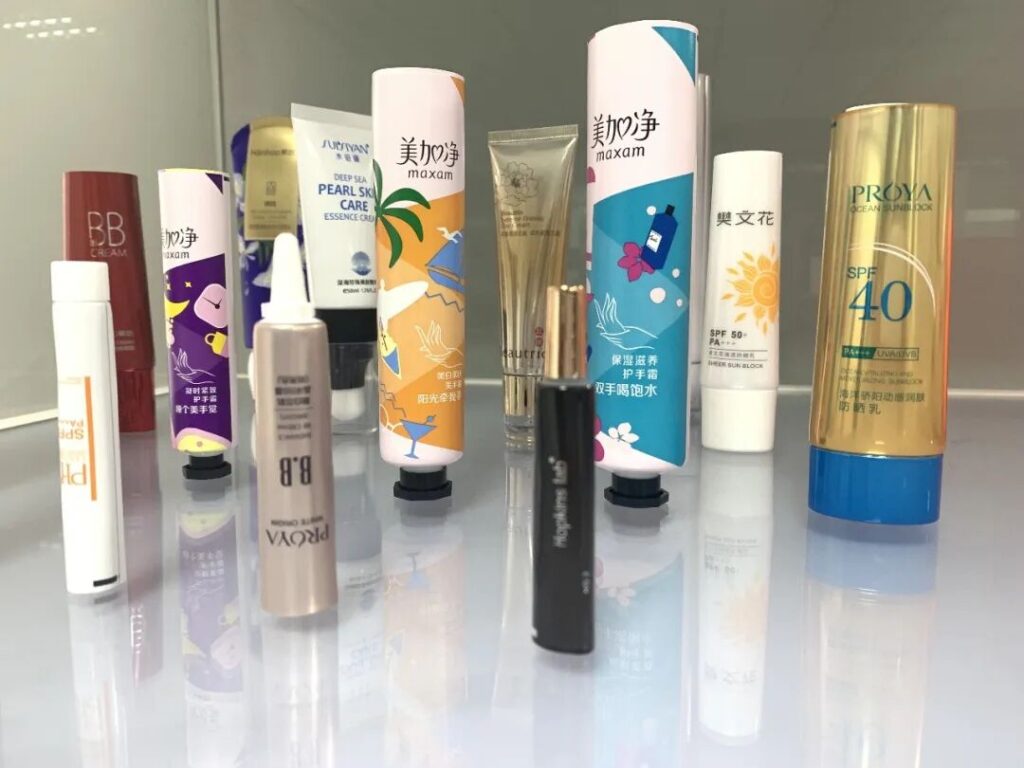
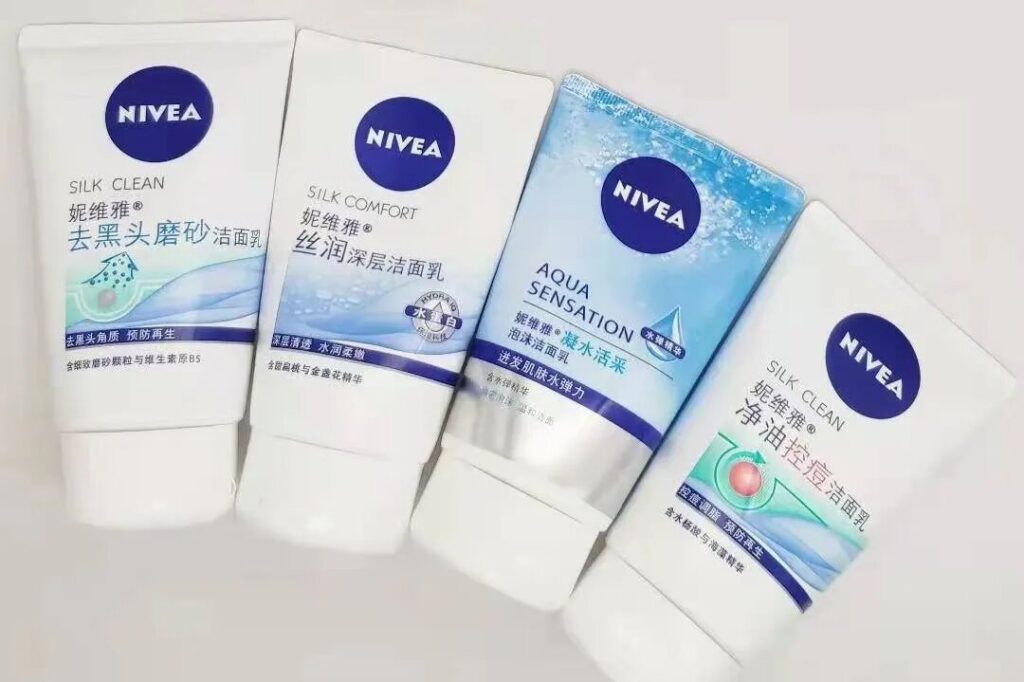
Laminated barrier cosmetic tubes are common everyday packaging solutions, widely used for products like toothpaste, 화장품, and food.
These tubes are produced on high-speed tube-making machines, transforming pre-manufactured composite sheets into finished tubes via processes including body welding, shoulder molding, and capping.The tube body serves as the container for the content and is the main component. The shoulder forms the nozzle through which the product is dispensed, and the cap is used to seal the tube.

The key distinction between a laminated tube and an extruded tube (the other main type of packaging tube) is that the laminated tube body is created by welding composite sheets.
The advantages of laminated tubes are significant:
- Material Flexibility: Laminated sheets offer far more flexibility in material selection compared to extruded tubes. This allows for greater diversity in appearance, barrier performance, and hand feeling.
- Superior Printing: Laminated tubes utilize flat sheet printing. Compared to the curved surface printing required for extruded tubes, flat printing allows for more precise registration (color alignment) and results in superior print quality.
- High Efficiency and Low Cost: Laminated tubes are produced by high-speed, integrated, fully automatic tube-making machines. Their tube-forming speed and production efficiency are significantly higher than those of extruded tubes, leading to a lower manufacturing cost.
The Manufacturing Process of Laminated Tubes
The production of laminated barrier tubes is divided into several main steps: Film Production (Blowing), Lamination, Slitting, Printing, and Tube Making.
01. Film Production
This step involves producing the outer and inner films for the composite laminate sheet. Considering mechanical strength, heat-sealing properties, and cost, blown film extrusion is the primary process used for both the inner and outer layers of the laminate.
During production, various polyethylene (체육) resins are melted and blended at specific ratios, then blown into thin films. These films can be monolayer or multilayer, depending on the required performance characteristics.
02. Lamination
Lamination is the process of bonding the outer film, inner film, and the core barrier layer (such as aluminum or EVOH) together using adhesive layers, thereby forming the final composite sheet.
Several lamination technologies exist, including extrusion lamination, dry lamination, and solvent-free lamination.
Extrusion Lamination involves uniformly extruding a hot-melt resin onto one substrate (film) using an extruder, then immediately pressing and cooling it against a second substrate.
Dry Lamination involves applying an adhesive to one film, evaporating the solvent in a drying oven, and then pressing it against the second film to form the composite film or sheet.
Extrusion lamination is the primary method for producing laminate sheets due to its consistent performance, lower production cost, and flexibility in specification changes. Dry lamination is used to a lesser extent, primarily to supplement the extrusion process where certain materials require better bonding strength due to its wider range of applicable adhesives.
계속됩니다…